Still trading without a plan?
"My buddy said it would pump, so I bought." Sound familiar? The problem is no plan.
Traders call a plan a scenario, and anyone can make one.
A scenario has three parts
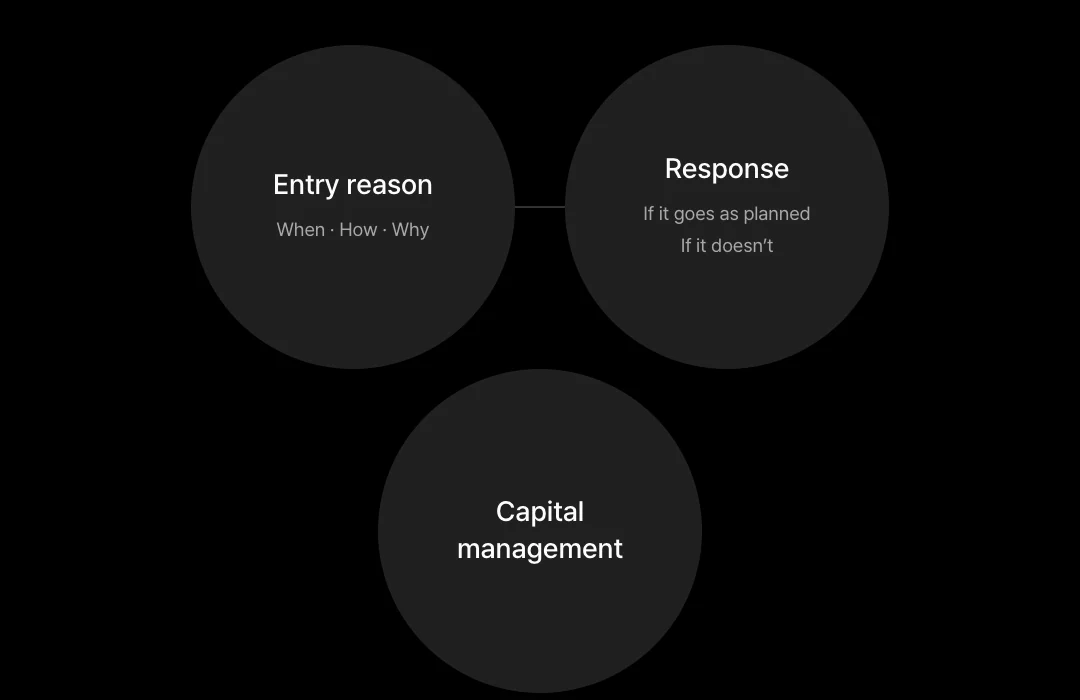
A scenario is like planning a trip: where to go, a backup if your flight is late, and a budget. Trading needs the same three things.
- Entry reason
Why you buy, in one line.
- Response
Where you cut, and where you take profit.
- Capital management
How much you risk on this one trade.
Write all three before you click buy.
Entry reason: there is no 100% in trading
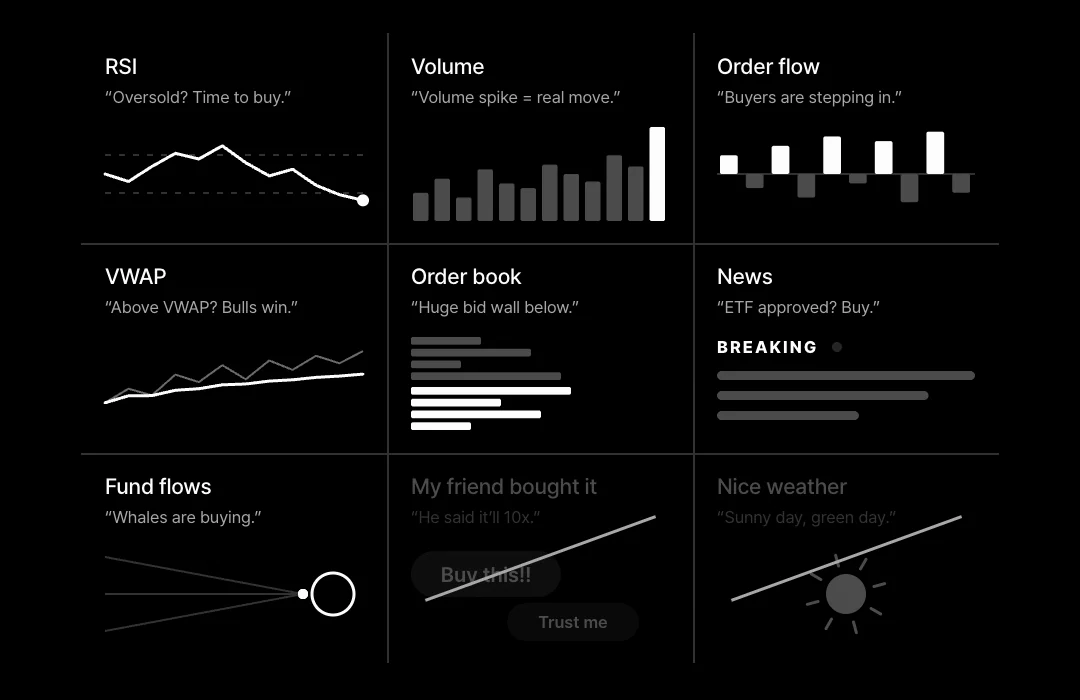
Geniuses and trading legends cannot call the next move. So look for reasons that are wrong less often: a price that fell too hard, or a sudden rush of buyers. Look at a few different signals, then build your own reason to enter.
"My friend bought it" is not a reason. That is a vibe, and a pricey one.
Response: when it works, and when it does not
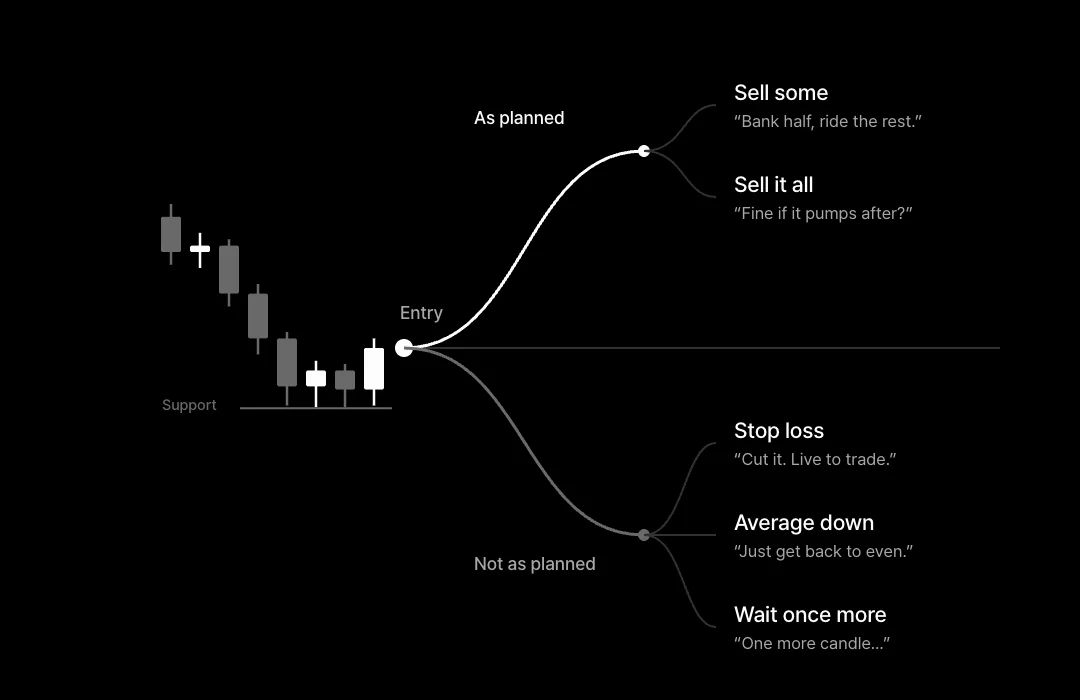
You are in for a good reason, so decide what comes next before it happens. If price goes up, do you sell some, or all of it? If it goes down, do you cut the loss, buy a little more, or wait?
Decide now, not when the candle moves.
Capital management: keep cash aside
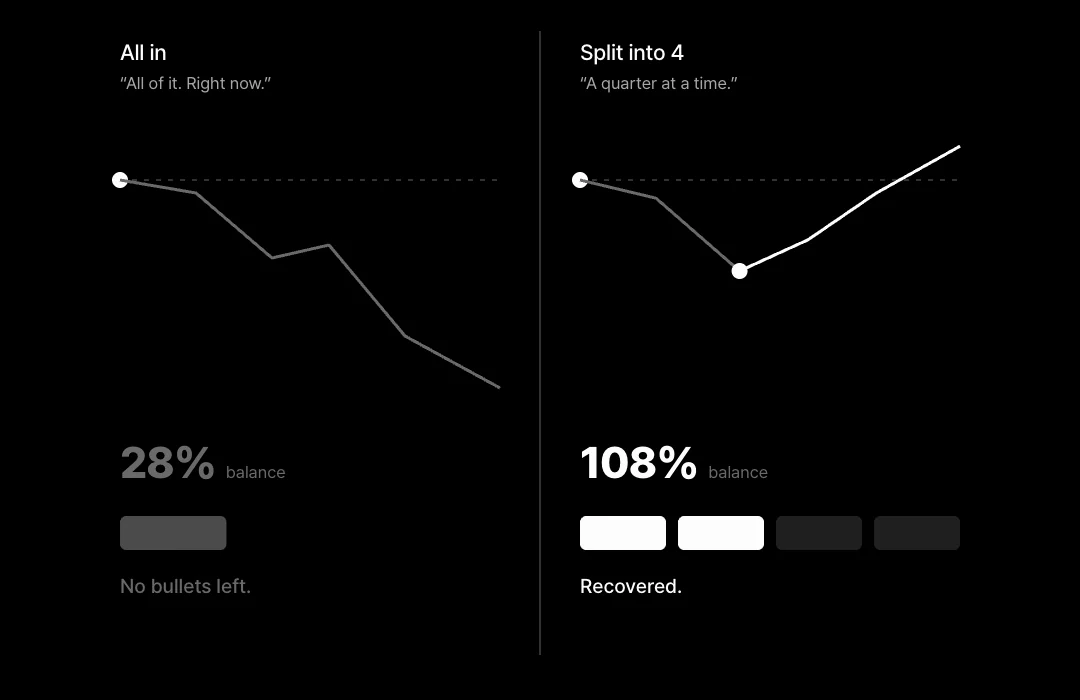
Ever notice it drops right after you buy? Put in all your money at once, and you are stuck. Split it up instead, say into four. If it drops, buy more. When it bounces, you are back.
Four is not magic. Always plan for the trade that goes wrong, and keep some cash on the side so you still have a shot.
Three questions before you buy
A scenario will not win every trade. Nothing will. But it protects your money, and every time you look back and fix it, it gets better. That is how an account grows, slowly and safely. Without a scenario, trading is closer to gambling.
Your win rate decides how big your wins must be and how much to bet.
Read: Expected Value →